Parag Sapre
Parag Sapre
Banking

Early Stage Startup

Banking, Rebuilt for the Last Mile

Develop a sustainable, scalable business model addressing COVID-driven banking issues and the last-mile customer challenges.

Background

Traditional banking models have struggled to scale beyond urban centers, leaving large rural populations underserved due to high infrastructure costs, low connectivity, and operational risk.

Despite years of financial inclusion efforts, banks still lack a viable way to reach last0mile customers without building expensive branches or relying on fragmented systems.

This case study focuses on the design of a doorstep digital banking platform that enables banks to expand into rural and semi-urban regions through a managed agent-based model. The goal was to create a white-label, compliance-ready solution that integrates with core banking systems while working reliably in real world field conditions like low literacy, intermittent internet access, and cash-heavy transactions.

Challenge

The challenge extended beyond digitization. Banks needed an operating model that balanced growth, compliance, risk, and unit economics across large on-field networks. Existing digital products were not designed for agents, supervisors, or regional managers who run these operations daily. The outcome was a role-based platform supporting the full banking ecosystem, from district managers and branch teams to on-field agents and customers, making it possible to deliver secure, accessible financial services at scale, while giving banks visibility, control, and a sustainable path to rural expansion.
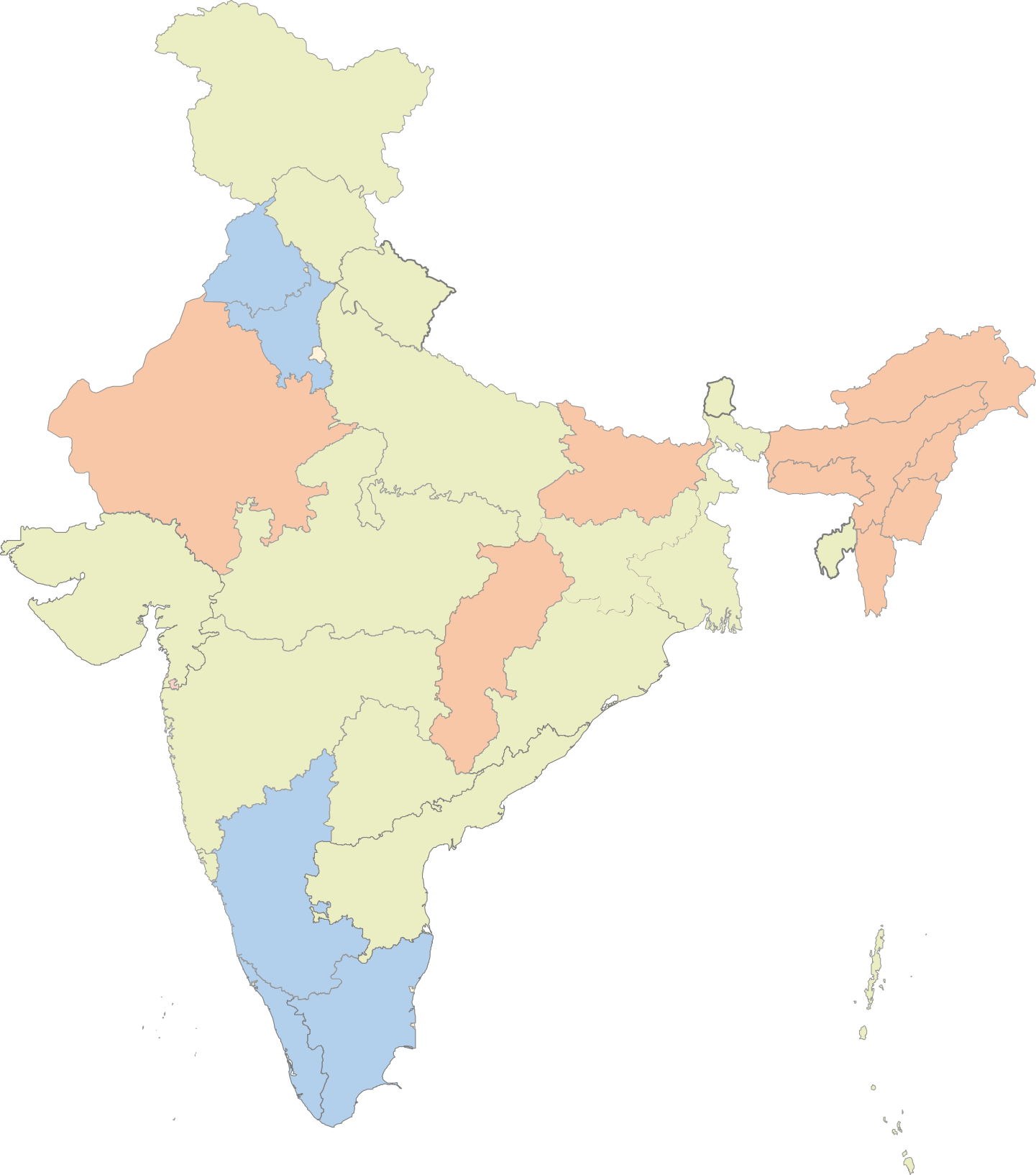
Pan-country banking penetrationTraditional Banking Infrastructure Reach
Traditional infra scales where money already exists, not where inclusion is needed. Scaling branches to close the rural gap would require orders of magnitude higher capex with diminishing marginal returns.
Financial Maturity & CoverageTraditional Banking Infrastructure Reach
Traditional infra scales where money already exists, not where inclusion is needed. Scaling branches to close the rural gap would require orders of magnitude higher capex with diminishing marginal returns.
In short:

  • 554,064 rural unbanked centers
  • Even one low‑cost branch per center is economically impossible
  • With only 7 branches per 100k population, rural branches are already stretched

The Problem

Despite decades of financial inclusion initiatives:

  • 629 million people remain unbanked in rural India
  • Over 554,000 rural unbanked centers still lack viable access points
  • Branch and ATM expansion remains capital‑intensive, slow, and urban‑biased

Key Challenges

  • Branch and ATM economics do not work at low population density
  • Patchy or unreliable internet connectivity
  • Cash-heavy local economies
  • Low literacy and language diversity
  • High operational and regulatory risk for banks
Result: Banks know the opportunity exists but lack a scalable operating model.

Market Opportunity

Despite decades of financial inclusion initiatives:

  • Rural areas have 1/4th to 1/8th the infrastructure density of urban India
  • Nearly 100% of unbanked demand exists outside cities
  • Digital + agent models show super‑linear revenue growth with coverage expansion

Key Challenges

  • ~USD 8.75 billion per year
  • Concentrated in rural and semi‑urban India
  • Driven by DBT flows, remittances, agriculture, migrant workers, and daily transactions
Insight: This is not a long tail. It is a concentrated, monetizable opportunity.

Solution

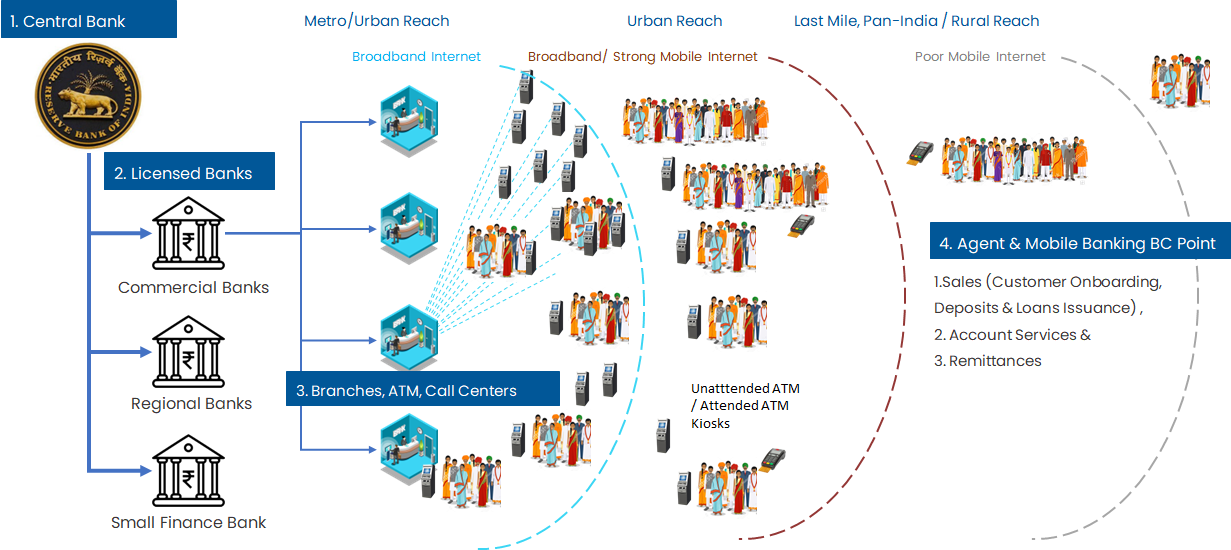
Traditional Banking Infrastructure ReachDesktop App (Banker & Agent Supervisor)

What Solution Provides

  • White‑label BC banking software
  • Agent & supervisor onboarding and management
  • Integrated KYC, compliance, audit, and reporting
  • Cash logistics and risk controls
  • Analytics for territory planning and profitability
Traditional Banking Infrastructure ReachTable App (On-field Agent)

What Banks Get

  • Rapid rural expansion without building branches
  • Lower capex, predictable opex
  • Compliance‑aligned operations
  • Improved customer acquisition and retention
Doorstep Digital Banking as a Managed Platform, tightly integrated with sponsor banks’ core systems.

Core Use Cases

The tool supports the full spectrum of rural banking needs:

Customer Services

Account opening (SB/CA)
Cash deposit & withdrawal
Remittances
Bill payments
Loans, insurance, investments

Operational Functions

Agent onboarding
Territory & limit management
Cash planning & surveillance
Audit trails & reporting
Analytics & dashboards

User, Use Cases & User Journey

District Manager
District Manager

Manages the bank branch network, health and financial feasibility


  • Identify profitable territories
  • Data analytics to build business cases for extending agent network
Branch Manager
Branch Manager

Manages day-to-day bank branch operations and agent network


  • BC agents & supervisors onboarding
  • New territory setup
  • Target monitoring, limits & operations
Agent Supervisor
Agent Supervisor

Manages on-field agents, new leads, and branch reporting


  • Cash monitoring
  • Target & operations monitoring
On-field Agent
On-field Agent

Manages customer tickets and cash disbursements on field


  • Digital Customer Application Filing (CAF)
  • Cash management
Customer
Customer

Operates banking needs through on-field agent


  • Cash in / cash out – mobile, fixed & offline modes

Role & Persona

District Manager (Growth Division)


  • Identify profitable territories
  • Data Analytics to support Business Cases for extending Banking Agent network

Traditional Banking Infrastructure Reach

Name: Sonal Rahane

Age: 42

Position: District Manager

Location: Tier 2 Town, India (e.g., Kanpur)

Experience: 18 years in banking

Responsibilities: Leads a team of 25-30 staff, manages P&L and operations, ensures compliance and customer relations

Traits: Empathetic leader, strategic thinker, detail-oriented, community-focused

Goals: Branch growth, operational excellence, team development, innovation

Challenges: Regulatory changes, economic conditions, technology integration, competition

Interests: Reading, yoga, travel

Operating Model

The tool follows a Build → Operate → Support model:

Design Influencers

  • 90% of agents operate outdoors Intermittent or no internet connectivity
  • Multilingual, low‑literacy customers
  • High compliance and security expectations
  • Cash handling risk Design

Principles

  • Offline‑tolerant workflows
  • Minimal cognitive load
  • Audio‑visual cues over text Role‑based interfaces (banker, supervisor, agent)
  • Rapid white‑label branding

Product Design Philosophy

The tool follows a Build → Operate → Support model:

Core Components

  • Platform Operations Application, hosting, integrations, analytics.
  • People Operations Agent recruitment, training, certification, attrition management.
  • Cash & Logistics Liquidity planning, cash limits, routing, risk monitoring.
  • Compliance & Security KYC, audit trails, RBAC, encryption, regulatory adherence.

Users & Stakeholders

The solution was designed for five distinct user roles, each with different goals and workflows.

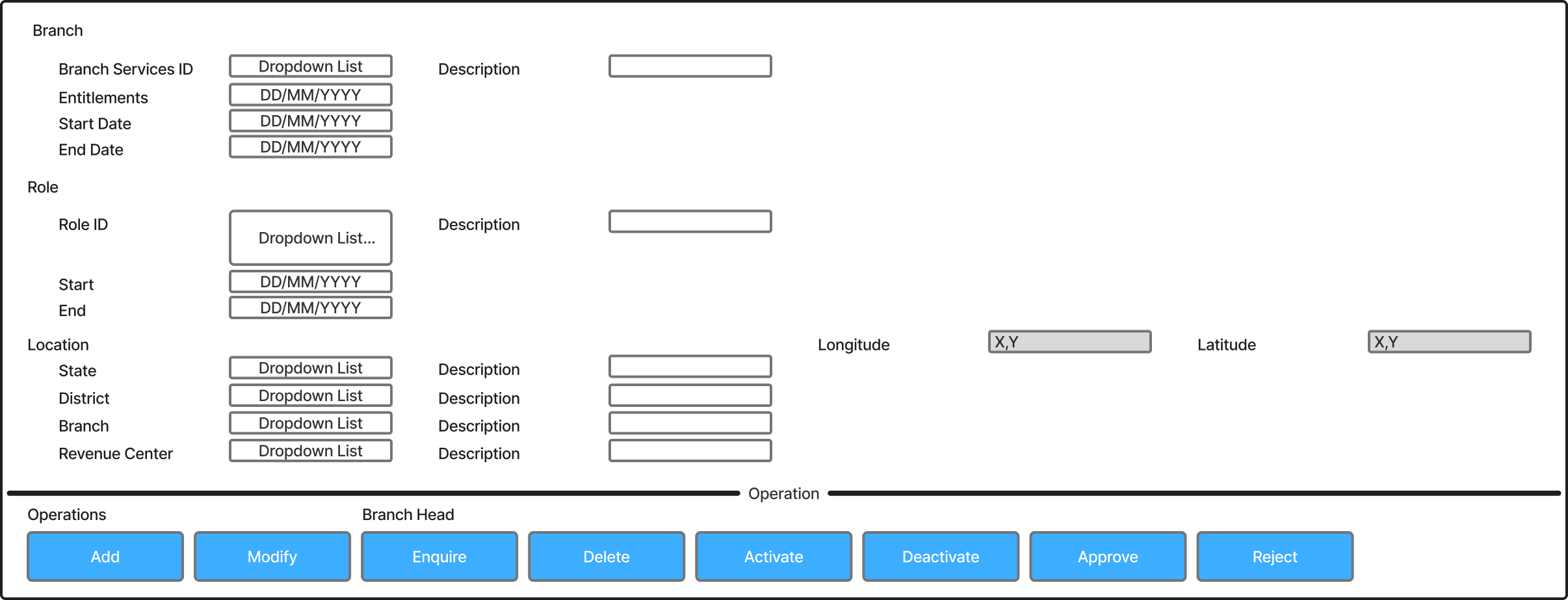
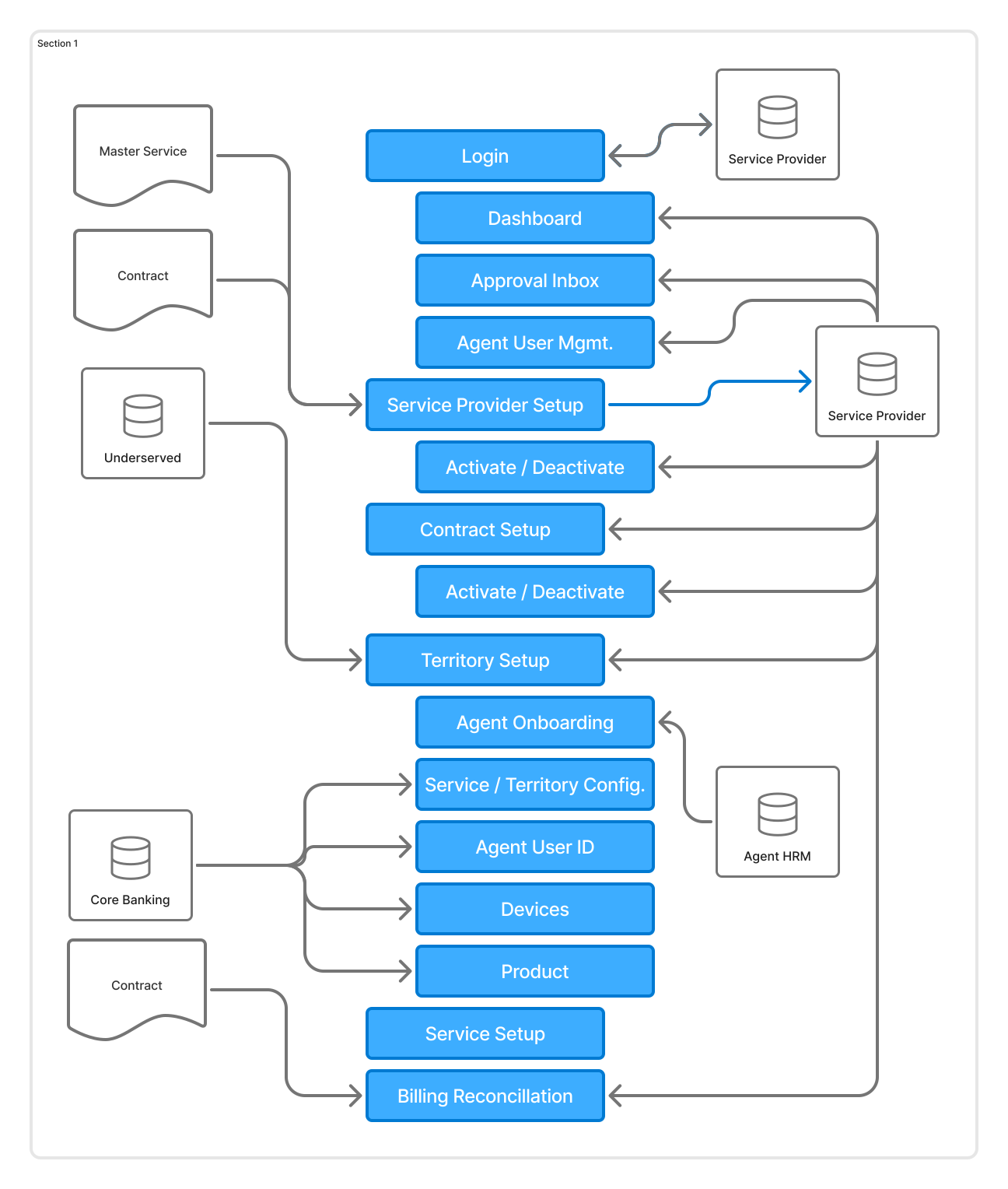
Use Cases: Forms, Fields, Functions, Layouts

Pan-country banking penetrationTraditional Banking Infrastructure Reach
Traditional infra scales where money already exists, not where inclusion is needed. Scaling branches to close the rural gap would require orders of magnitude higher capex with diminishing marginal returns.
Pan-country banking penetrationTraditional Banking Infrastructure Reach
Traditional infra scales where money already exists, not where inclusion is needed. Scaling branches to close the rural gap would require orders of magnitude higher capex with diminishing marginal returns.

Prototype

The solution was designed for five distinct user roles, each with different goals and workflows.
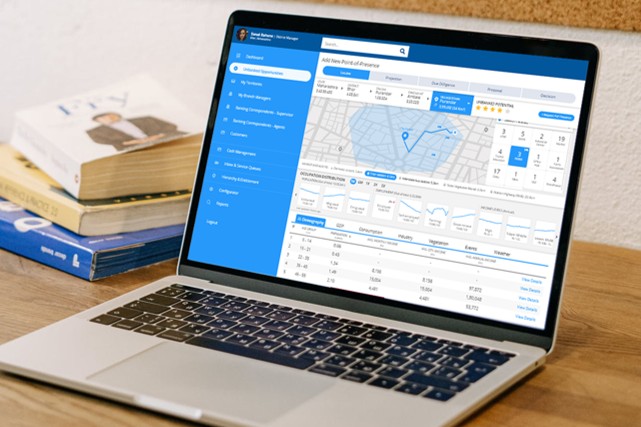
New Territory Search & Recommendation (District Manager)Traditional Banking Infrastructure Reach
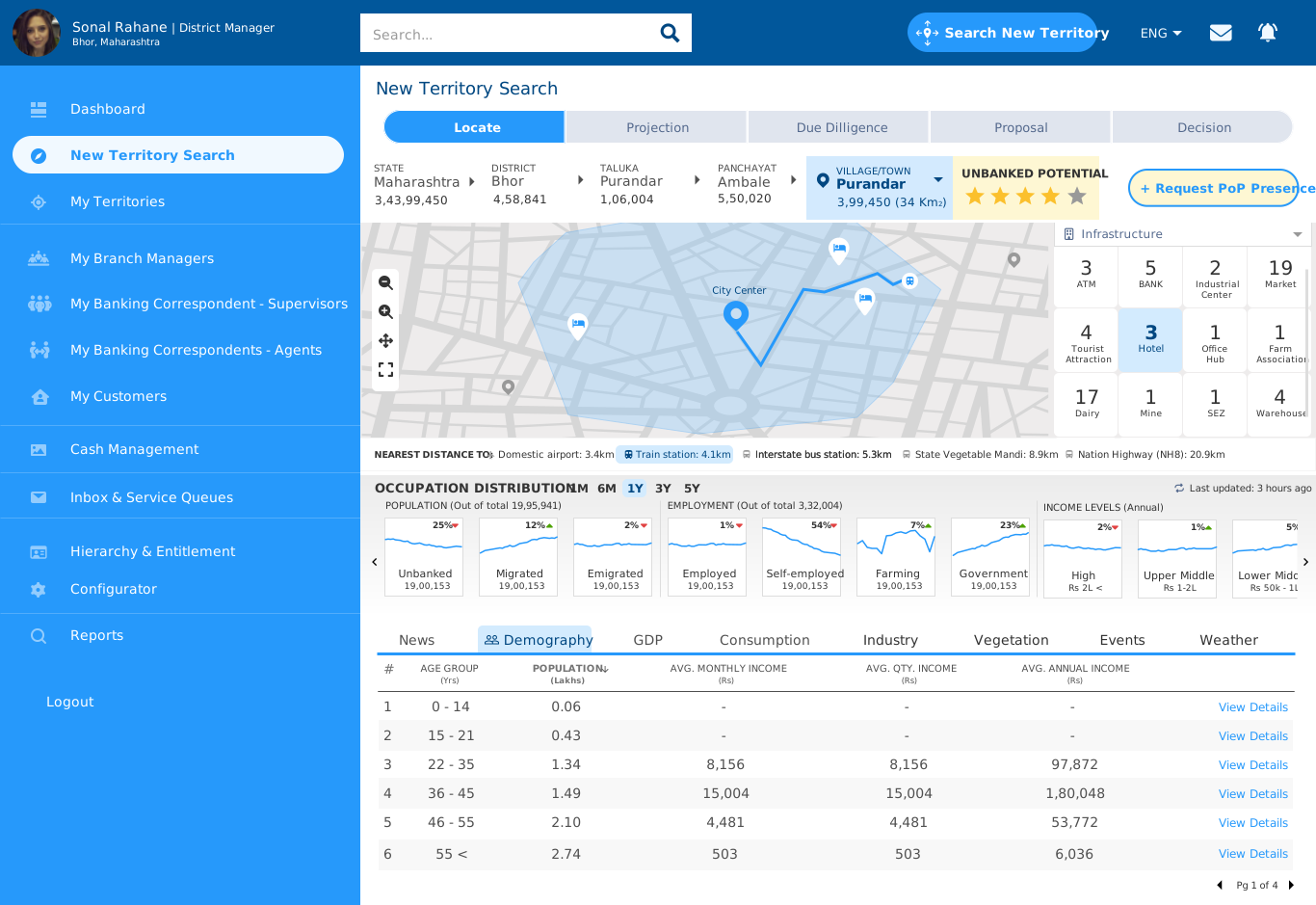
A data‑led territory search helps banks optimize branch networks by combining internal performance data with external indicators such as demographics, income, consumption, signals like local activity and live feeds for the selected region. The view enables faster, more confident decisions on where to expand, rebalance, or optimize operations - helping banks managed customer alignment and branch profitability.
Multi-year Project & Planning (District Manager)Traditional Banking Infrastructure Reach
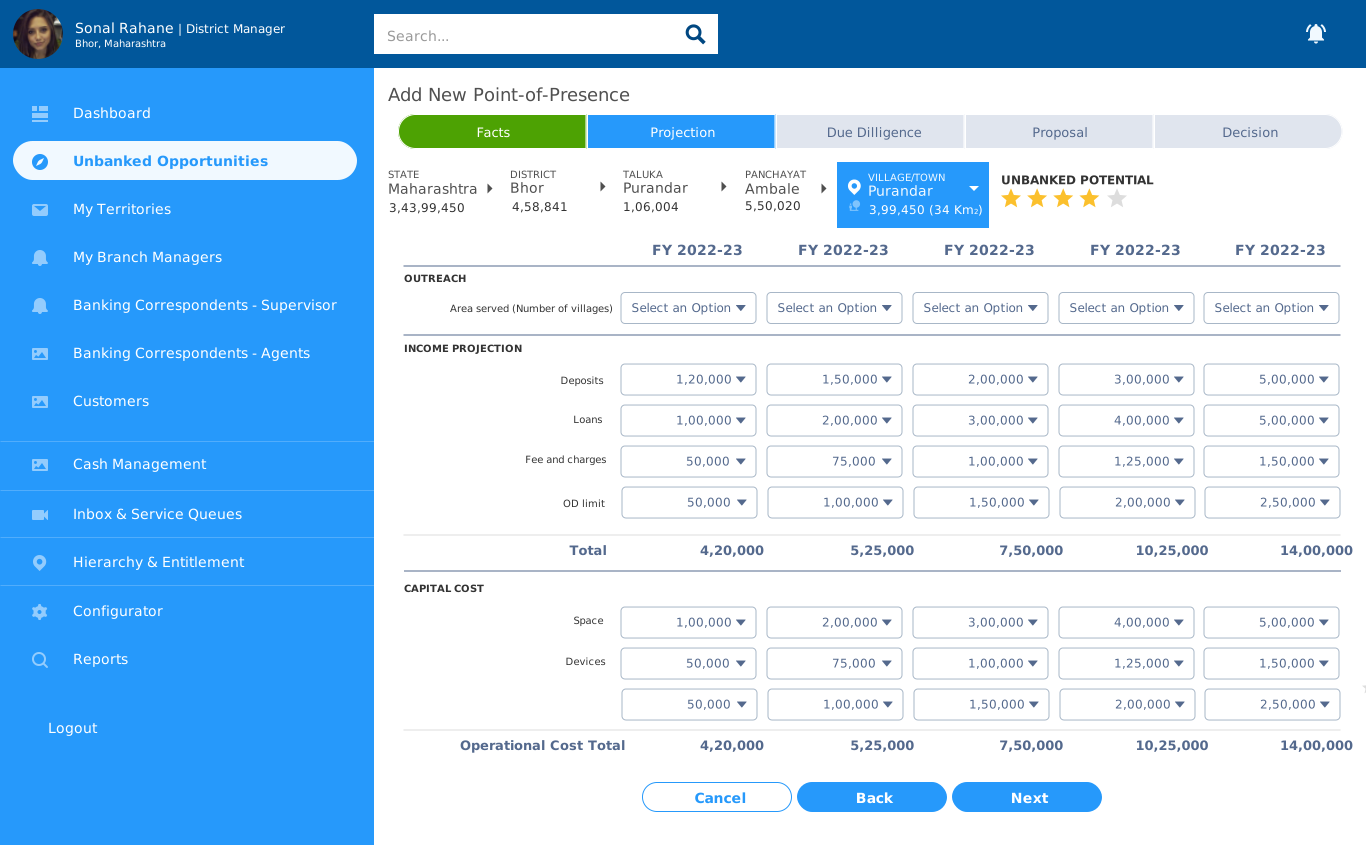
Once a location is shortlisted, multi-year forecasting enables branch managers to build a rigorous 5-year business case by projecting customers, revenues, and costs using local market and economic indicators. This creates a clear, data-backed view of viability and risk—allowing leadership to approve, fund, and execute new branches with confidence and defined timelines.
Agent Supervisor Overview & Management (Branch Manager)Agents Overview & Management
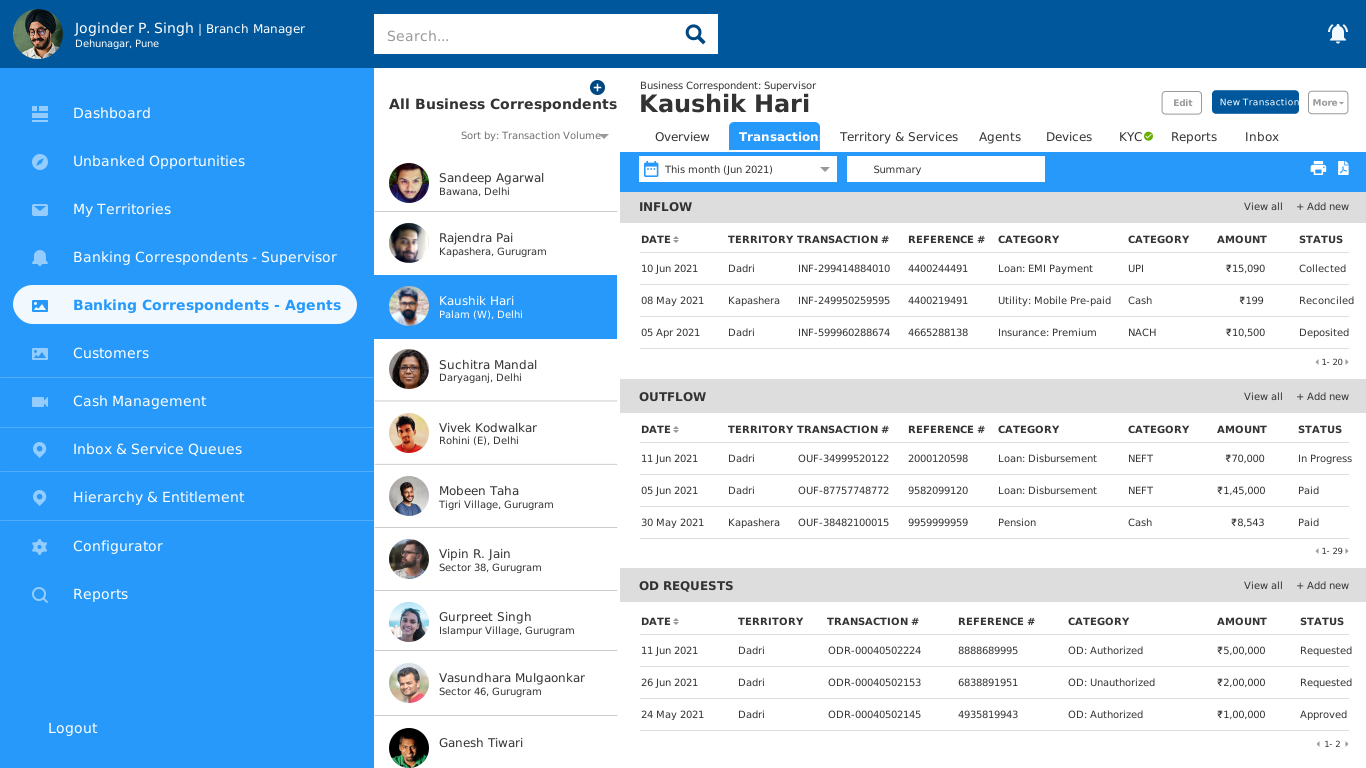
A centralized agents overview enables banks to manage large field networks with clarity and control by tracking onboarding status, location, activity, limits, and performance in near real time. This allows branch and regional teams to quickly identify gaps, optimize coverage, manage risk, and ensure agents are productive, compliant, and aligned with local demand.
Territory Overview (Agent Supervisor)Traditional Banking Infrastructure Reach
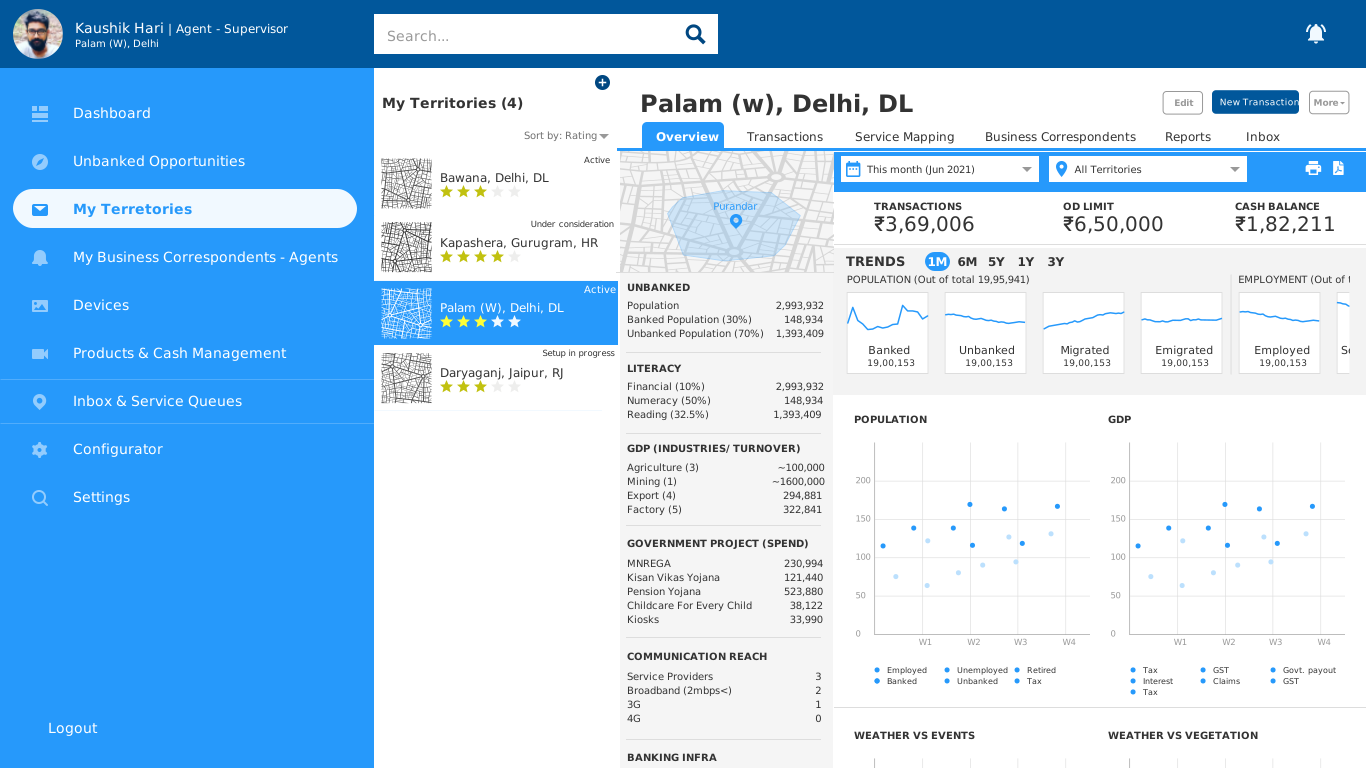
A territory‑level overview gives supervisors clear visibility into the agents they manage, including coverage areas, activity levels, cash positions, and service performance. This enables day‑to‑day coordination, quicker issue resolution, and better workload balancing. And also ensures field operations are run smoothly while staying aligned with branch targets and compliance requirements.
Pan-country banking penetrationTraditional Banking Infrastructure Reach
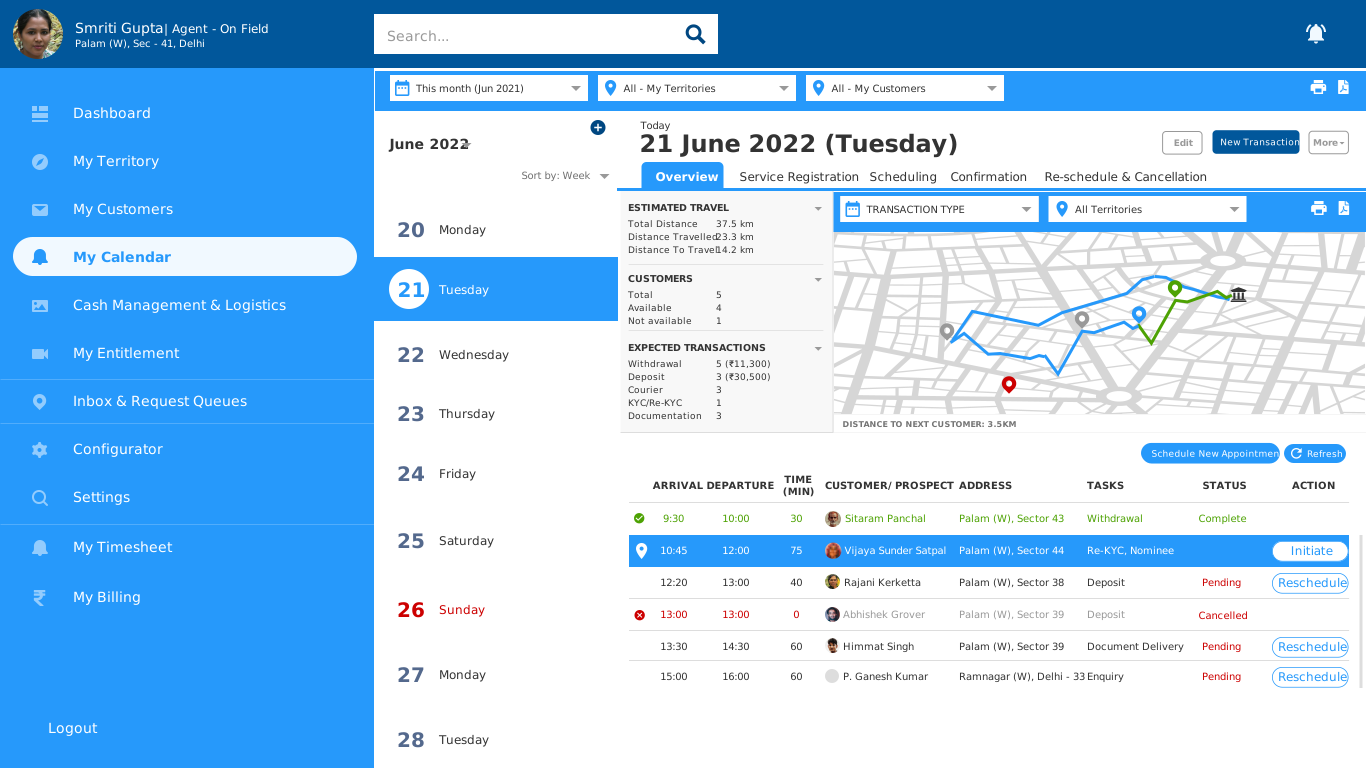
A time‑planning tool helps on‑field agents organize daily customer visits by optimizing routes, schedules, and service priorities based on location and workload. This is designed to improve productivity, reduces travel inefficiencies, and ensures customers are served on timewhile. The visibility also reflect in the supervisor and branch manager's dashboards, keeping them abreast with status and operational gaps.
Customer Form Capture (On-field Agent)Traditional Banking Infrastructure Reach
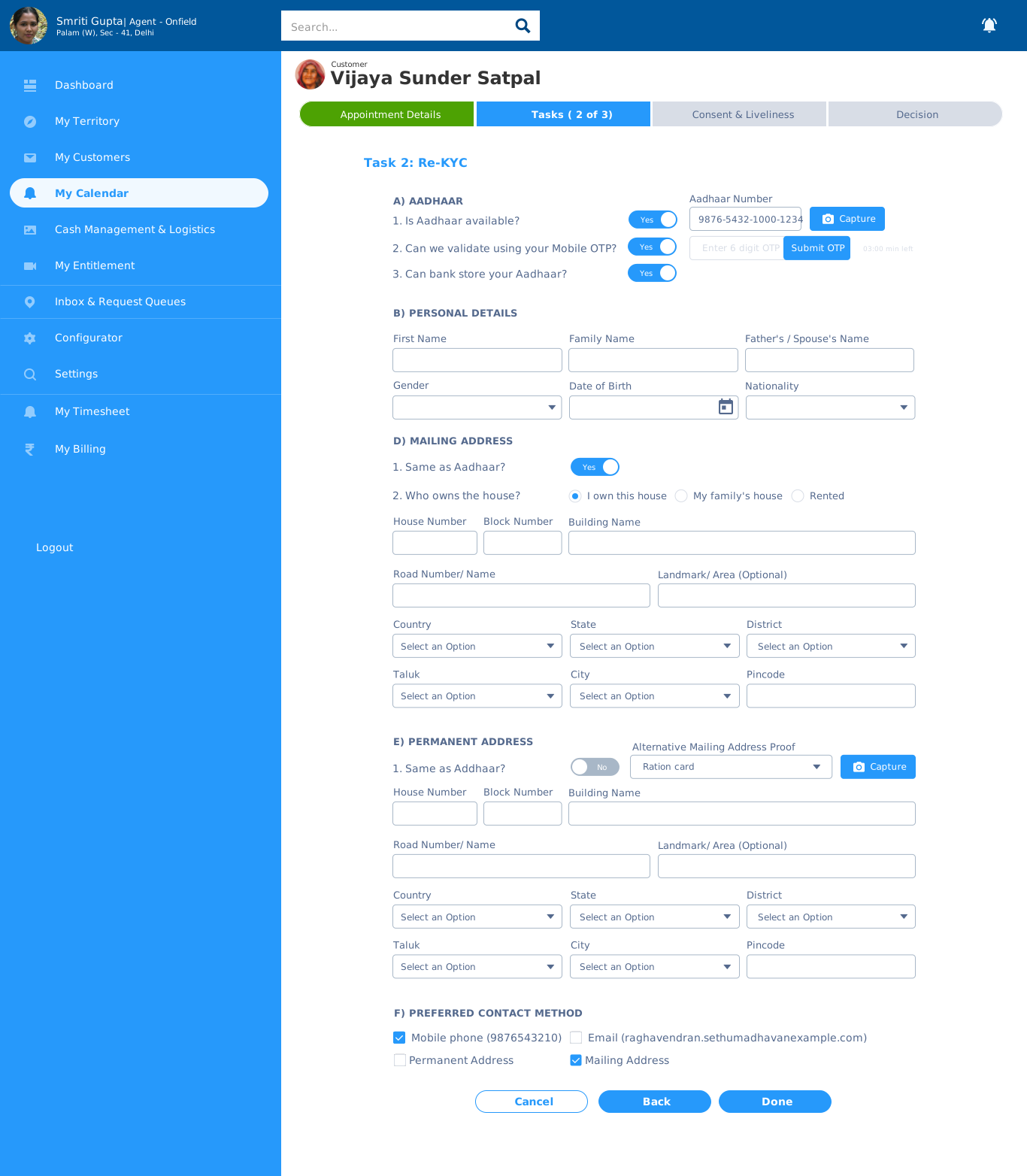
A tablet‑based customer form enables agents to guide customers through data capture during field visits, helping clarify banking terms and processes while addressing digital and literacy gaps. This assisted, standardized interaction improves customer understanding and trust, enhances data accuracy, and ensures secure, seamless flow into banking and compliance systems.
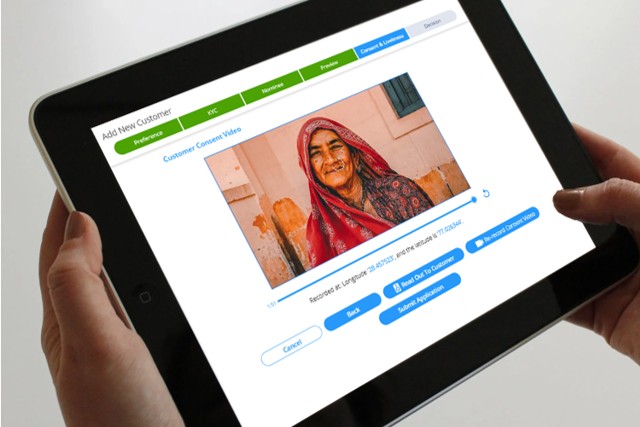
Pan-country banking penetrationTraditional Banking Infrastructure Reach
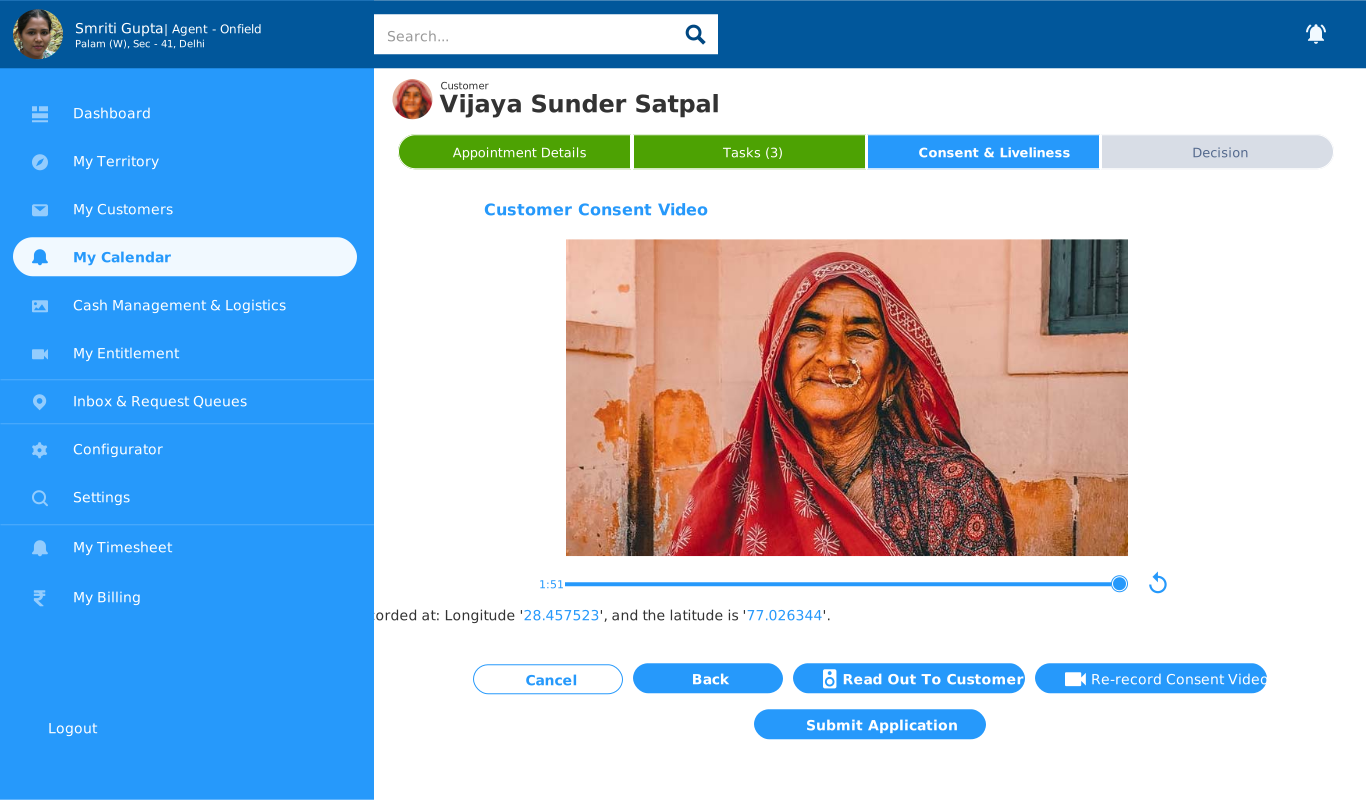
At the end of the onboarding flow, live customer capture and video‑based KYC enable real‑time identity verification, with the system guiding the customer through spoken prompts and confirmations. This assisted interaction improves transparency and understanding, builds trust, and ensures regulatory compliance especially for customers unfamiliar with digital banking processe or document related challenges.


Success

  • Enabled scalable rural expansion
    Provided banks with a practical alternative to physical branches, allowing rapid coverage growth in rural and semi-urban regions with predictable operating costs.
  • Established a viable agent-led operating model
    Successfully translated complex banking operations into structured, role-based workflows for district managers, branch teams, supervisors, and on-field agents.
  • Improved operational visibility and control
    Gave leadership real-time insights into territory performance, agent productivity, cash positions, and risk-supporting data-driven decisions at every level.
  • Designed for real-world field conditions
    Delivered reliable, offline-tolerant experiences that worked across low connectivity, multilingual environments, and low-literacy customer interactions.
  • Accelerated onboarding and service delivery
    Simplified KYC, customer onboarding, and daily transactions, reducing friction for agents while increasing trust and adoption among last-mile customers.
  • Reduced risk and compliance overhead
    Embedded audit trails, role-based access, and regulatory controls directly into workflows, minimizing operational and compliance gaps.
  • Created a repeatable, white-label platform
    Built a modular system that could be easily branded, deployed, and extended across regions-supporting long-term scalability and reuse.
  • Aligned business viability with financial inclusion
    Demonstrated that inclusive banking can be commercially sustainable by balancing customer accessibility, operational efficiency, and bank profitability.

Scope

  • Market & Trend Analysis
  • Opportunity Framing
  • Stakeholder Alignment
  • Audit & User Research
  • Problem Definition
  • Business Model Exploration
  • Concept Ideation & Validation
  • Product Direction & Roadmapping
  • Experience & Journey Mapping
  • Service Blueprinting
  • Prototyping (Lo, Hi, Code)
  • Design Systems
  • Go‑to‑Market Strategy
  • Go‑to‑Market Enablement
  • Service Performance & Metrics
  • Continuous Improvement

Timeline

1 Year: From discovery to investor